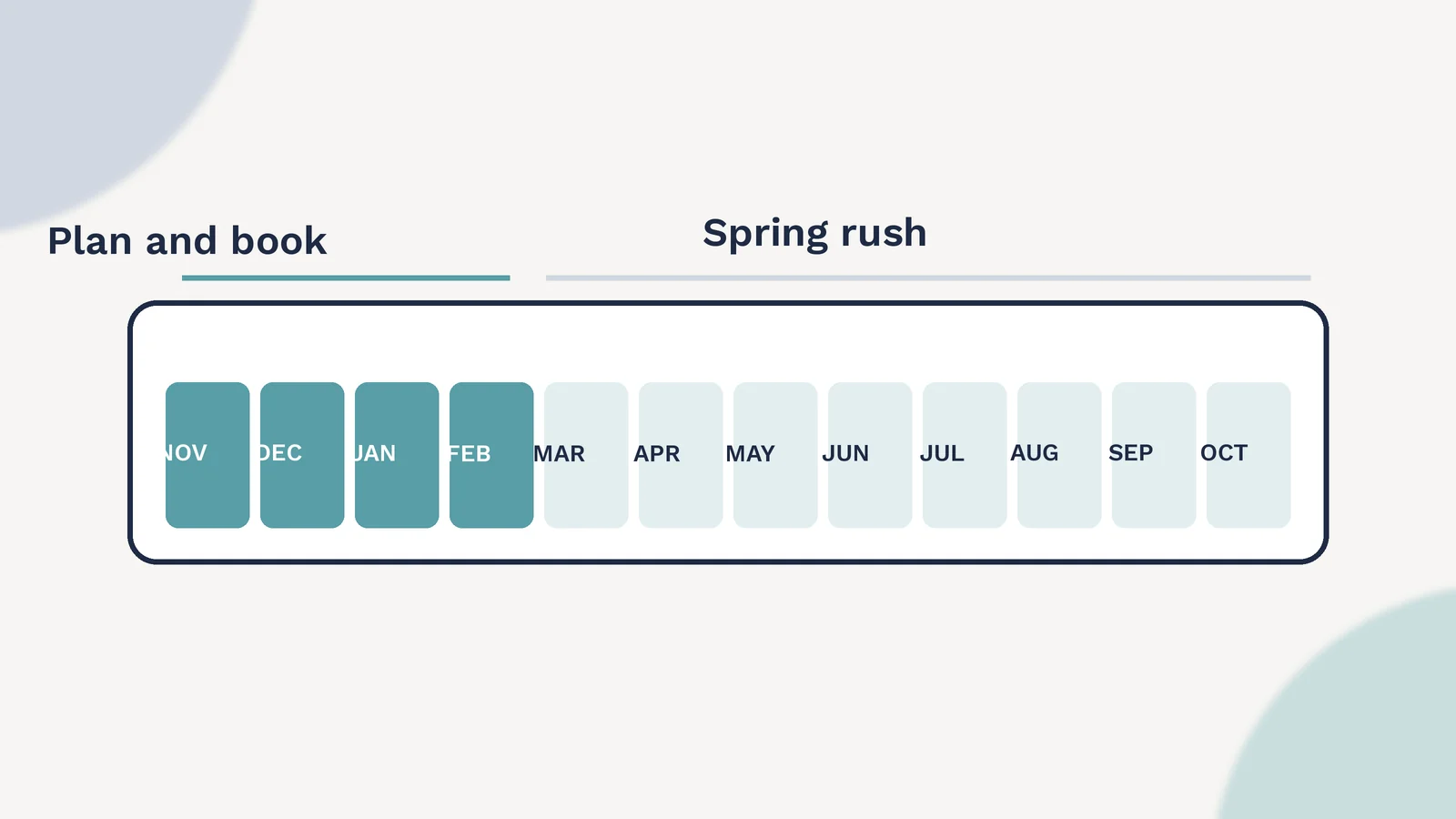
That quiet stretch from November into February is not dead time. It is the best window of the year to do the marketing work you never get to in July, and to book the jobs that will carry you into spring. Here is how painters, builders, and service crews around Myrtle Beach can use it.
Slow does not mean zero. Some work actually fits the off season better, and your marketing should say so plainly.
Interior painting, cabinet refinishing, trim and drywall repair, flooring, and small remodels all work fine when it is forty degrees and windy at the beach. Short term rental owners often schedule refreshes between the last fall guests and the first spring bookings, because a week of downtime in January costs them far less than a week in June. Snowbirds arriving for the winter notice what needs fixing in a place that sat empty for months. Homeowners who put off a project during a busy summer are often ready to move before the holidays or right after.
Look at your last two winters. Write down which jobs actually came in, from whom, and where they were. That short list tells you what to promote right now.
Your Google Business Profile is the first thing many local customers see, and most trades leave it untouched for a year. Winter is the time to fix that.
Add your recent project photos, especially interior work that matches what you want to book this season. Check your hours, service area, and services list so they match how you actually run in winter. Post a short update about interior work, rental turnovers, or spring booking, written the way you would say it on the phone.
Then ask the customers you finished this fall for a review while the job is fresh. Our post on Google and reviews for Myrtle Beach trades walks through a simple way to ask without being awkward.
You probably know at least one thing on your site that bugs you. A broken form, an old phone number, a services page that still lists work you stopped doing, photos from three trucks ago. Winter is when those fixes actually get done.
Start with the basics a customer touches:
If you have a backlog of good job photos from this year, turn a few of them into proper project pages. Our note on project photo pages for Grand Strand trades covers what to include so those pages bring in calls instead of just sitting there.
The crews that start spring with a full calendar usually booked a good part of it in winter. Homeowners and property managers who want exterior painting, a deck rebuild, or an addition in April are often planning in January. If you are the one who answered and gave them a clear number, you get the job before the rush.
A few ways to make that happen:
Keep it honest. If your spring weeks really do fill up, say so. If they do not, do not pretend they do.
Your best leads in winter are people who already know you. Pull up the list of customers from the past year or two and the estimates that went quiet.
For past customers, a short personal note works: thank them again for the job, mention you are booking interior and spring work, and ask if anything else around the house is on their list. For estimates that went quiet, check in once, without pressure. Plans change, and a homeowner who passed in August may be ready now. Our post on follow up after the estimate has simple message examples you can adapt.
Keep a note of who replied and what they asked about. That list becomes your spring pipeline.
Winter is also a good time to sit down with the people who send you work or could. Property managers who run rental units from Little River to Pawleys Island, real estate agents who need quick pre listing touch ups, general contractors who sub out paint or trim, and suppliers who hear about jobs before you do.
Buy someone a coffee, drop off a card, ask what they need from a trade partner. None of that shows up on a dashboard right away, but it is often where steady repeat work comes from on a coast where everyone knows everyone.
The last piece is getting ready for March, when you will not have time to think again.
Decide how you will answer calls and form leads when you are on a job, and who calls back and how fast. Set up a simple list for open estimates and follow ups if you do not have one yet. Write the two or three text and email messages you send most often so you are not typing them from scratch in a parking lot. Look at where your calls came from this year so you know which places to keep and which to stop paying for.
None of that is complicated. It just never happens in the busy months.
If you only do a handful of things this off season:
That is enough to come out of winter with a fuller calendar than you went in with.
If the slow months are when you finally want to sort out your website, Google profile, or lead follow up, we can help you pick the few changes that matter for your trade and get them done before spring. Reach out through our contact page and we will look at it with you.