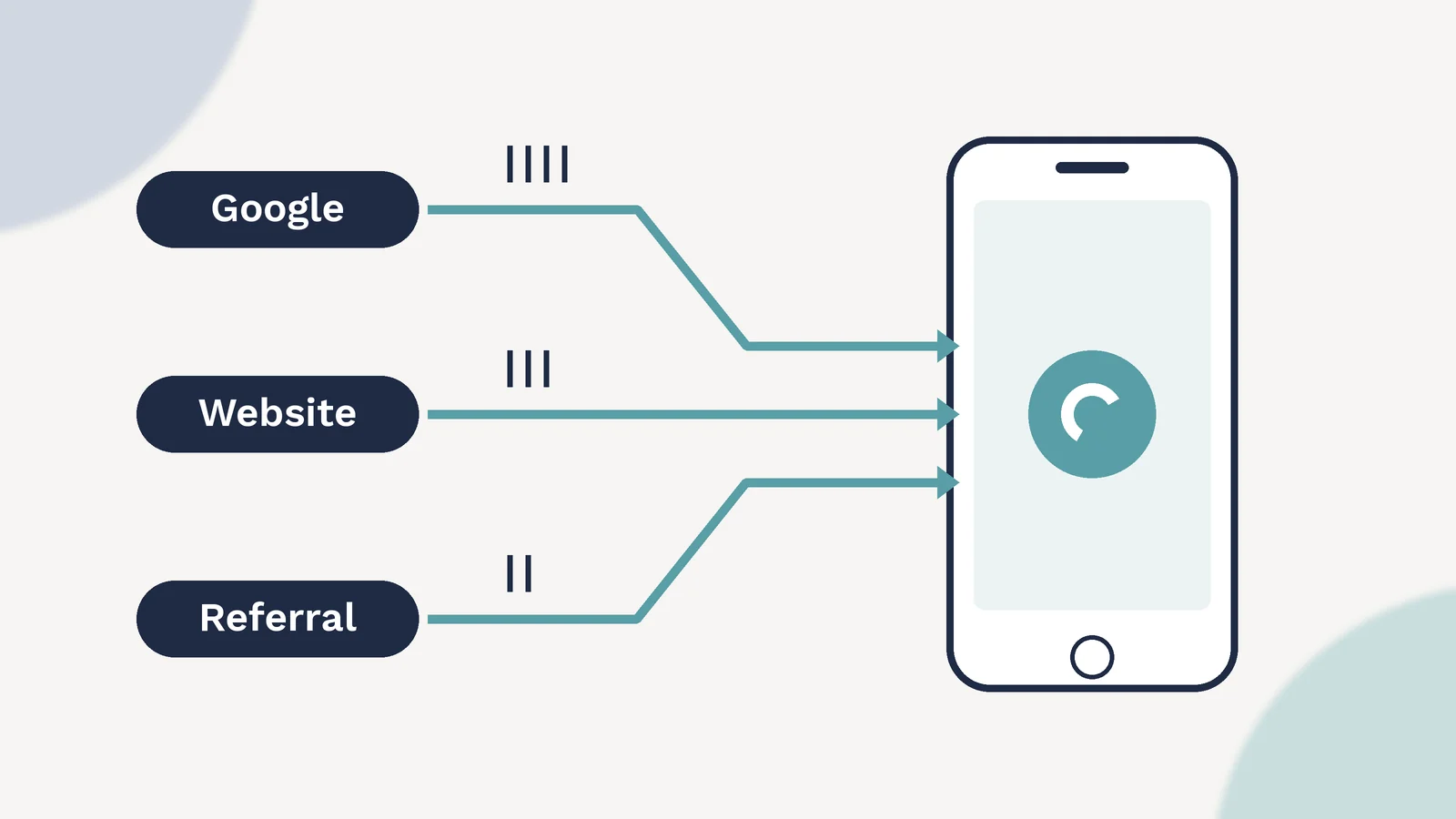
You don't need an enterprise software stack to answer those questions. You need a handful of simple habits and one or two inexpensive tools, set up once and checked every month. This post walks through what that looks like for a painting company, a builder, or any local service crew from Little River down to Pawleys Island.
Word of mouth is real, but it rarely works alone anymore. A neighbor in Socastee mentions your name. The homeowner searches for you on Google, looks at your reviews, clicks through to your website, reads a project page or two, and then calls. In your head that job came from a referral. In reality it came from a referral plus your Google profile plus your website, and if any one of those had looked weak, the call might have gone to someone else.
When you lump everything under "word of mouth," you can't see which of those pieces is doing the work. You also can't see the jobs you lost because a piece was broken. A slow website or a profile with old hours doesn't send you an angry email. It just quietly sends people to the next company on the list.
The cheapest tracking tool you will ever own is a single question: "How did you find us?" Ask it on every new call and every new form, and write the answer down in the same place every time.
A few tips that make the answers more useful:
Put the answers in whatever you already use, whether that's a CRM, a spreadsheet, or a notebook by the phone. The tool matters less than doing it every single time.
People misremember. Someone who found you through your Google Business Profile will often say "online" or "a friend told me." Call tracking numbers fix that by giving each source its own number that forwards to your main line.
A common simple setup looks like this:
Every call rings your phone the same way it does now. Behind the scenes, the tracking service logs which number was dialed, so at the end of the month you can see how many calls each channel produced. Many services cost a small monthly fee per number, and some CRMs include it.
One caution about your Google profile: keep your main business number listed as the additional number on the profile so your name, address, and phone information stays consistent across the web. Your web person can set that up in a few minutes.
A lot of homeowners, especially folks who just moved to Myrtle Beach and are working during the day, would rather fill out a form than call. If your quote form goes to an inbox that nobody watches closely, those leads are invisible.
Two small changes help:
If you want to go a step further, your website can record which page the person was on when they filled out the form. If most of your quote requests come from your exterior painting page and almost none come from your deck page, that tells you exactly where to spend your next round of work. We covered what to do once those requests come in, in our post on turning website quote requests into booked jobs.
Tracking only helps if you look at it. Pick one day each month, maybe the first Monday, and spend twenty minutes answering a few questions:
That last question matters more than people expect. A channel that sends ten small repaint calls might be worth less to you than one that sends two full exterior jobs. Count jobs and dollars, not just calls.
On the Grand Strand, also keep the season in mind. Calls slow down for many trades in the deep winter and spike in spring before the summer rental season. Compare this March to last March, not to January, or you'll draw the wrong conclusions.
Once you have a few months of honest numbers, decisions get easier.
If your Google profile is producing a big share of calls, it deserves regular attention: fresh photos, current hours, and steady reviews. Our post on Google and reviews for Myrtle Beach trades has a checklist.
If calls from your website are low but people say they found you on Google, the website may be losing them after the click. That usually points to slow loading on phones, a hard to find phone number, or pages that don't match what people searched for.
If you work in several towns but almost every lead comes from one, you may need pages that speak to the other areas you serve. That's what our post on service area pages that rank is about.
If a paid listing or directory produced nothing for six months, you have real evidence to cancel it, instead of a hunch.
The most common way lead tracking fails is not bad software. It's a system so complicated that the office stops using it by the second week. Start with the question on every call. Add tracking numbers when you're ready. Add form tracking after that. Each step is useful on its own.
If you'd like help setting up call tracking, form tracking, or a simple monthly report that shows where your jobs come from, reach out to Check Channels. We work with builders, painters, and service businesses across Myrtle Beach and the Grand Strand, and we're happy to look at what you have now and suggest the smallest setup that answers your questions.